MapleStory Idle RPG: Old IP, New Heights
In just a few months, MapleStory Idle RPG reached $164M in IAP revenue and 7.6M installs. We took a closer look at this success and pulled together a few lessons you can take from it!
— Lera Kalashnikova
A strong IP’s legacy can live on for decades, even in a fast-changing gaming market. NEXON’s MapleStory proves exactly that. First launched as a PC MMORPG in 2003, the franchise has since expanded across platforms, constantly experimenting with new formats and genres, and even 20 years later it continues to deliver new hits. And that's exactly what MapleStory: Idle RPG is!
After its global release in November 2025, the game quickly climbed to the #1 spot among top-grossing RPGs. In just a few months, it reached $164M in IAP revenue and 7.6M installs. What stands out even more is the revenue trend. While downloads started to decline soon after launch, monthly revenue kept growing. Even with slower UA, the game continues to scale by effectively monetizing its existing player base.
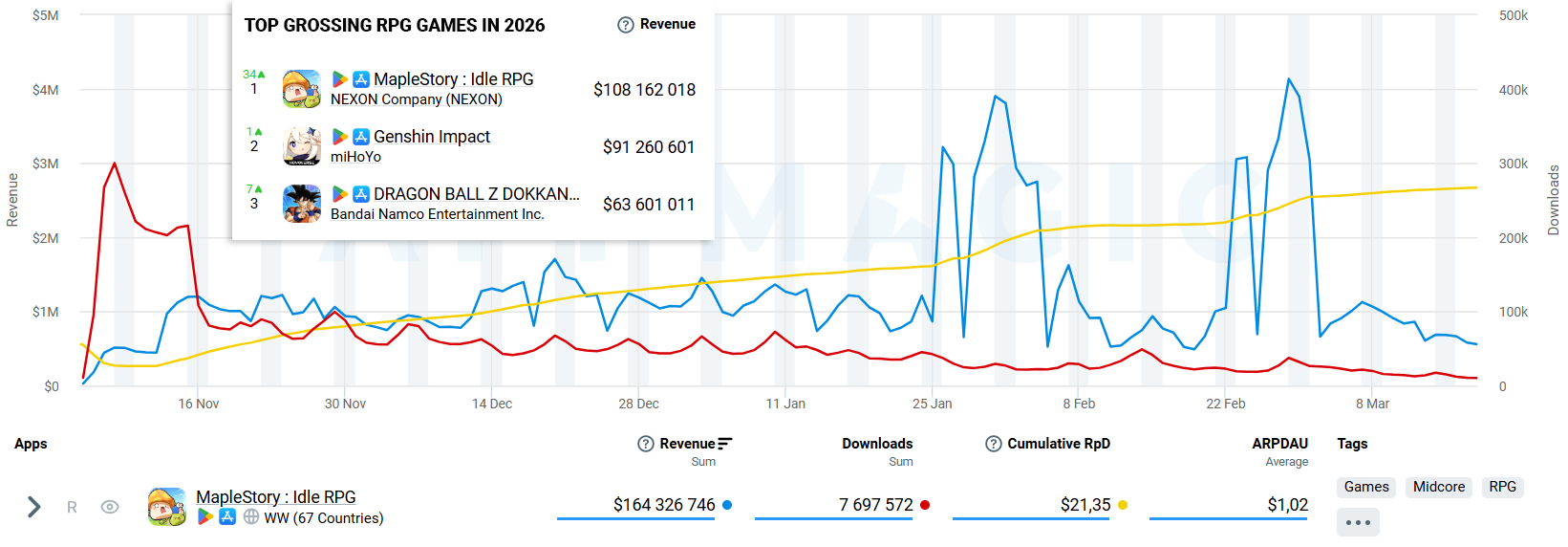 MapleStory: Idle RPG revenue and downloads
This is not the franchise’s first step into mobile territory. Back in 2016, NEXON released MapleStory M: Fantasy MMORPG. Since then, the game has made almost $0.5B in lifetime revenue, peaking at $11.4M in January 2021 and maintaining stable performance over the years. That was already a great result, but MapleStory: Idle RPG took the franchise’s success to the next level and peaked at $44M in its fourth month after launch. Other mobile entries in the franchise also performed decently, but none came close to what we see now.
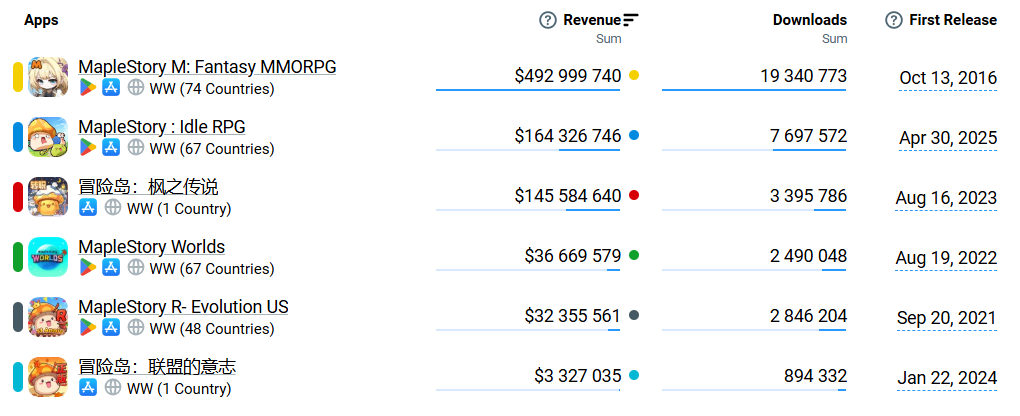 MapleStory IP-based mobile games
This time, the studio created something new yet very familiar: the core gameplay of MapleStory: Idle RPG still feels like an MMORPG, but layers idle elements like AFK income and an energy-saving mode on top of it. Combat runs automatically, so the players can focus on upgrading gear and skills. At the same time, social systems remain central: guilds unlock additional progression, rewards, and large-scale events like raids and boss fights.
With multiple progression layers and a wide range of systems to upgrade, the game is much closer to an MMORPG than a typical Idle RPG. And that’s no coincidence. This title is clearly built for fans of the original game, using nostalgia in both its marketing and gameplay design.
The Secrets of the Game’s Monetization
Instead of diving into every system, let’s focus on the most valuable insights behind its rapid growth. One of them is how the game carefully introduces this complexity through fast but gradual onboarding, allowing players to learn without feeling overwhelmed.
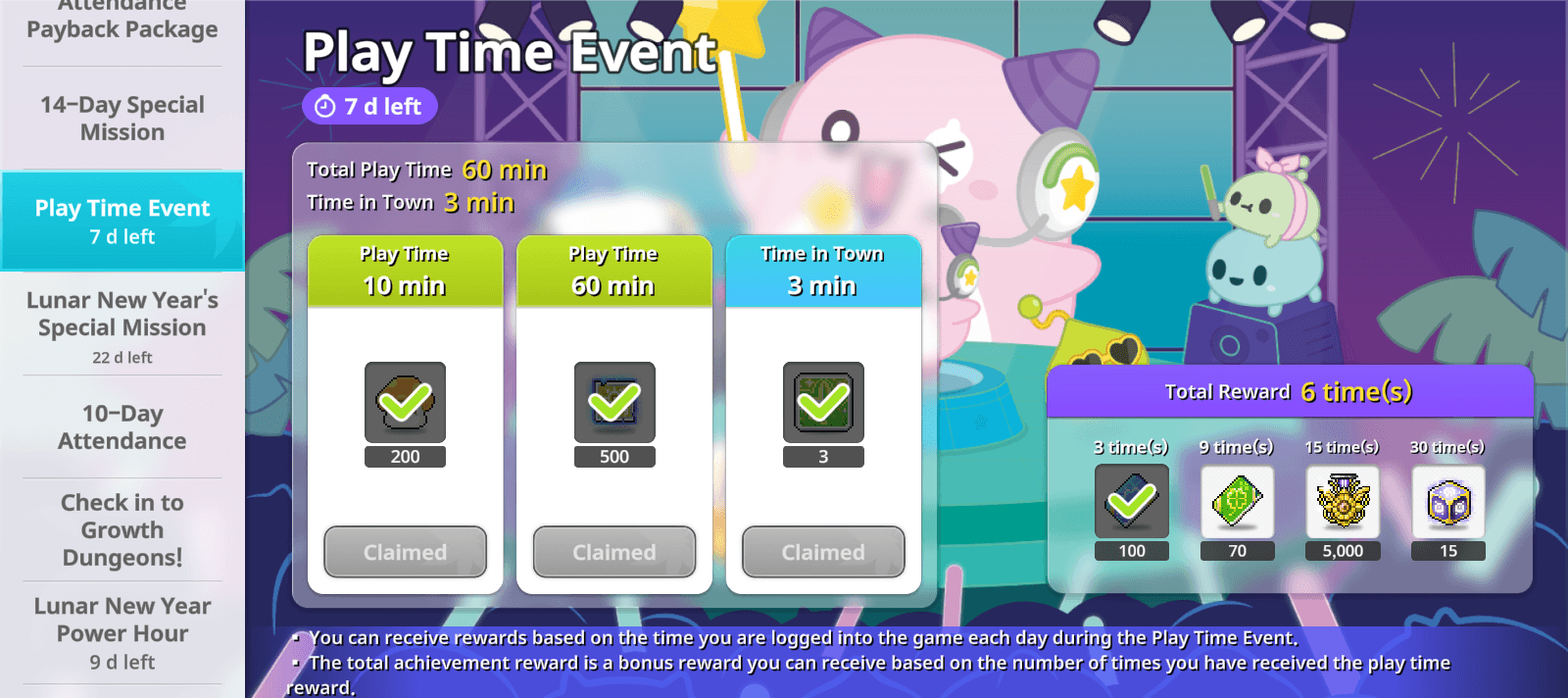
You can clearly see this in the game’s LiveOps. Rather than relying on an intense event grid, the game sticks to simple, classic formats like login rewards and task-based events. It leverages clear, straightforward mechanics: for example, the Play Time Event directly encourages longer daily sessions by rewarding players for the time spent in the game.
 On top of that, developers add lots of guild events, building on the social foundation the franchise has gained over the past twenty years. Seasonal competitions include leaderboards both within guilds and between them, creating an environment where social prestige plays a meaningful role.
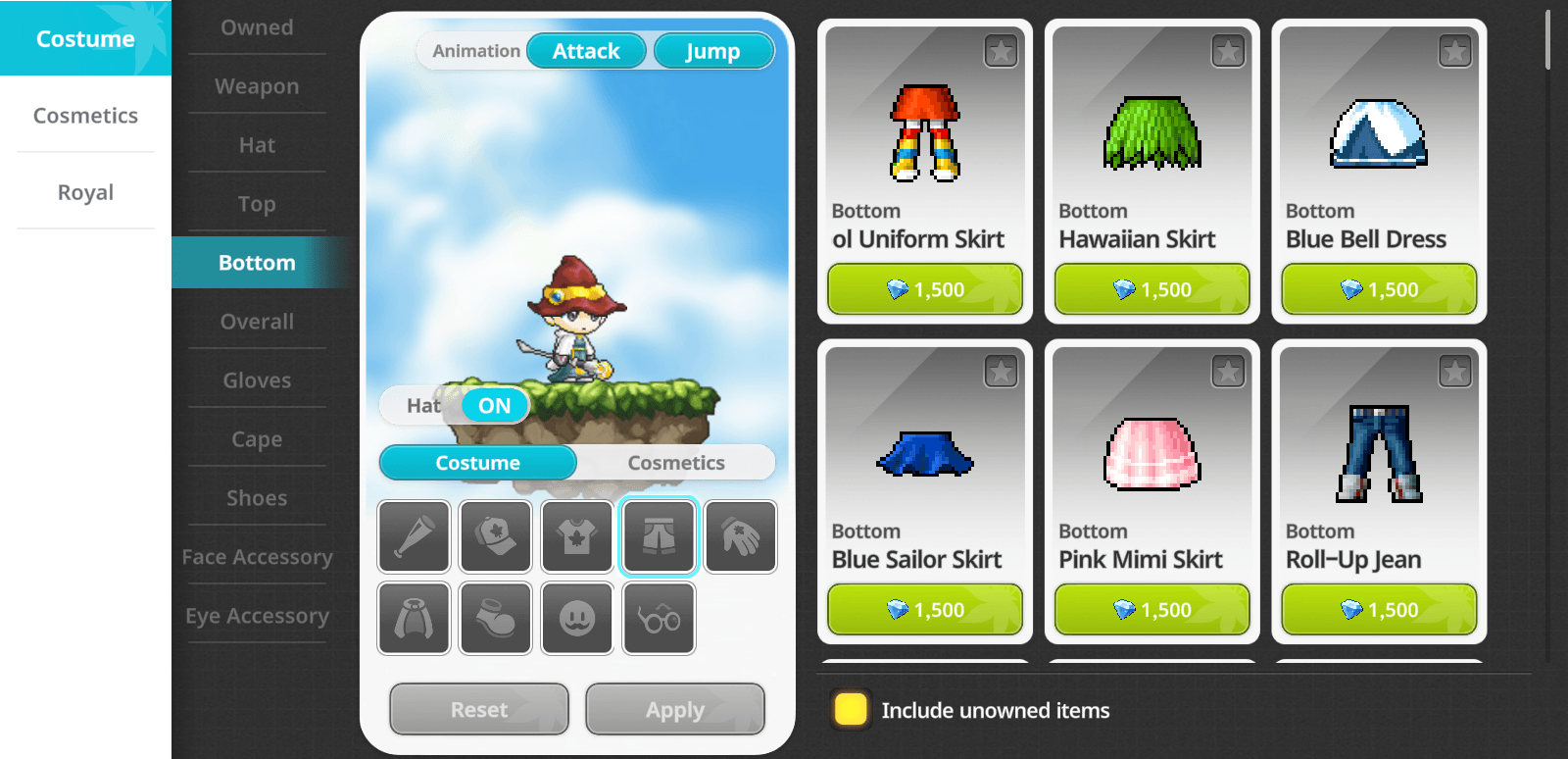
This social dynamic directly feeds into monetization. For example, only those who spend money can customize their characters, which are visible to everybody in the shared in-game spaces. All hairstyles, outfits, and accessories are locked behind premium currency, with non-payers only having access to free gameplay-related gear.
The game also offers passes and memberships, but their impact is relatively small. The monthly Premium Membership ($8.69) accounts for just 3% of purchases, and the $36.49 pass makes up only 1%, while other options contribute even less. So most of the revenue comes from currency packs and various offers. But which ones actually drive it?
According to our IAP Revenue Distribution tool, the five most common purchases fall within the $2.19–$32.99 range (for example, the Style Starter Pack at $4.39 and the $10.9 Premium Currency Pack). However, pricing extends well beyond the usual $99.99 cap. And players are willing to spend: the $109 currency pack generates over 13% of revenue, while the $219 offer accounts for the largest revenue share with around 25%. In fact, we are seeing more and more similar large offers lately, which we analyzed in one of our previous newsletters.
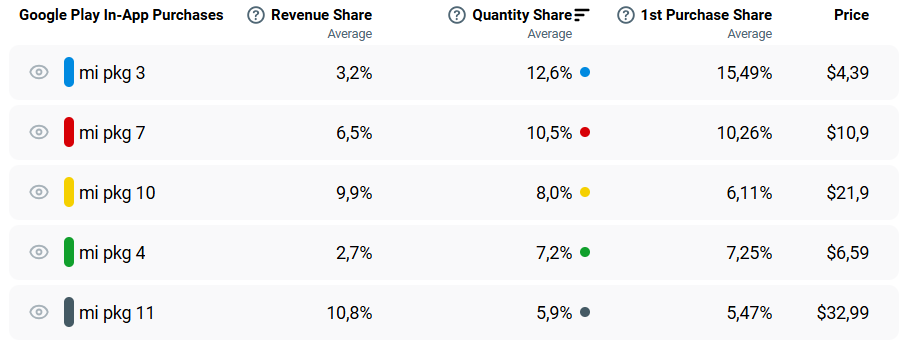 Top 5 offers in MapleStory: Idle RPG by quantity share
To add more flexibility to pricing, the game uses a dual payment system, allowing purchases either with premium currency or with direct cash. This not only converts more players, but also reduces drop-offs caused by insufficient currency and gives players more options.
This approach is often used in time-limited Hot Deals triggered by specific conditions, like reaching certain levels or spending a set amount of premium currency. These offers are framed as rewards for progress rather than paywalls, while currency-based triggers help drive repeat purchases.
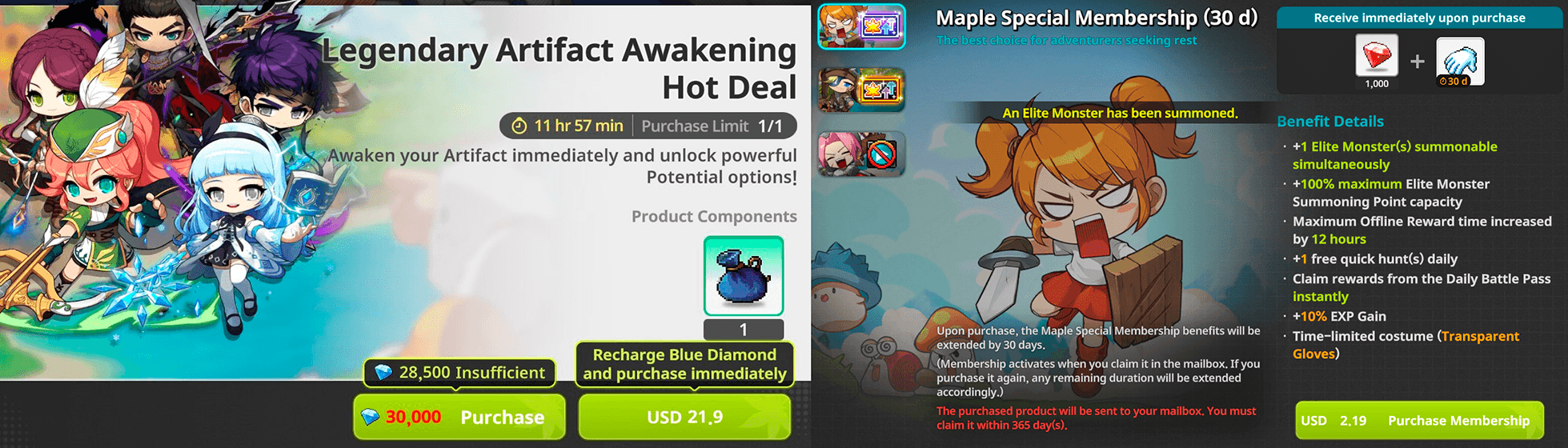
Together, these features smoothly guide players through progression checkpoints, encouraging repeat purchases along the way. While not every studio can roll it all out at the same scale, it highlights the revenue drivers behind the game's tremendous success.
Key Insights for Your Strategy
The key is how well these systems are balanced: gameplay supports long-term engagement, LiveOps remains supportive rather than overwhelming, and monetization consistently provides reasons to spend within the existing audience, making up for lower UA intensity.
In this setup, here’s what studios can learn from MapleStory Idle RPG:
- LiveOps that strengthen the core: social features and simple mechanics like login calendars and event tasks support the long-term focused gameplay
- Customization locked behind spending: non-payers get their free rewards, but extra skins can only be purchased, which works perfectly in social-driven games
- Extra monetization depth: whales are monetized with offers above the $99.99 tier, which generate up to ~40% of the game’s revenue.
- Dual payment system: offering both premium currency and direct purchases gives more options and drives LTV.
These strategic choices, combined with gameplay tailored to a long-standing community, support the game’s growth. It goes to show how understanding your audience and meeting its expectations can elevate a two-decade-old franchise to new heights. While the original PC game is still active, NEXON delivered a mobile experience that feels both familiar and easier to pick up.
This article was featured, along with other pieces, in our biweekly AppMagic Newsletter from March 11, 2026. If you’d like to receive insights like this ahead of others, subscribe here or in the form bellow.